
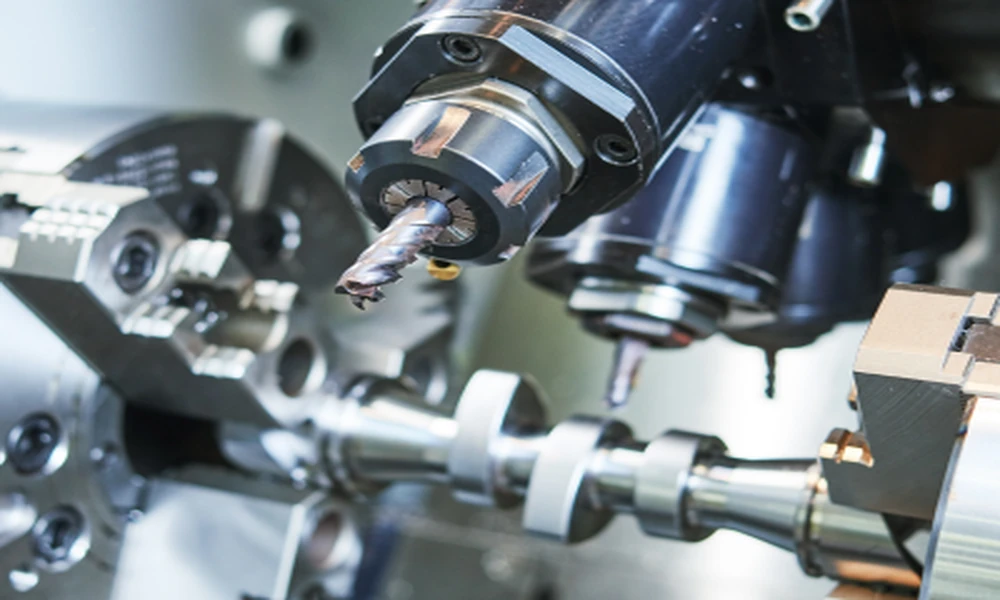
In today’s competitive industrial landscape, automation has become a driving force behind efficiency and consistency. For precision components manufacturers, the integration of automated technologies is not just a trend but a necessity to meet rising quality expectations and tight production timelines. From CNC machines to robotics and AI-driven systems, automation enables manufacturers to produce intricate parts with minimal human intervention while maintaining superior accuracy. This transformation is especially relevant in India, where manufacturing sectors are rapidly modernising to match global standards and export demands.
Improved Accuracy and Consistency
One of the biggest advantages of automation in manufacturing is the ability to achieve consistent results across large production volumes. Machines programmed with precise specifications eliminate the variability that often comes with manual processes.
- Automated systems follow exact measurements without deviation
- Repeatability ensures every component matches the required design
- Reduced human error leads to fewer defects and rework
This level of precision is particularly important for industries such as automotive, aerospace, and medical equipment, where even minor errors can have serious consequences. Automated calibration tools also help maintain accuracy over long production cycles, ensuring that quality does not degrade over time.
Enhanced Production Speed and Efficiency
Automation significantly boosts production speed, allowing manufacturers to meet high demand without compromising on quality. Advanced machinery can operate continuously with minimal downtime, increasing overall output.
- Faster cycle times compared to manual machining
- Ability to run operations 24/7 with limited supervision
- Reduced setup time through programmable systems
For precision turned components manufacturers, this means delivering bulk orders within shorter deadlines while maintaining strict quality standards. Additionally, automation reduces dependency on skilled labour shortages, which can often delay production in traditional setups.
Cost Optimisation in the Long Run
Although the initial investment in automation may seem high, it offers substantial cost savings over time. By minimising errors and reducing waste, manufacturers can improve their overall profitability.
- Lower labour costs due to reduced manual involvement
- Decreased material wastage through accurate machining
- Fewer maintenance issues with modern automated systems
Automation also helps optimise energy usage by running machines more efficiently. This is particularly beneficial in India, where energy costs can significantly impact manufacturing budgets. Over time, these savings contribute to a stronger return on investment.
Flexibility in Complex Manufacturing Processes
Modern automated systems are highly adaptable, allowing manufacturers to handle complex designs and customised requirements with ease. This flexibility is crucial in industries where product specifications frequently change.
- Easy reprogramming for different designs and dimensions
- Capability to produce complex geometries with high precision
- Seamless integration with digital design tools
This adaptability enables manufacturers to produce high-quality, precision turned components that meet diverse industrial needs without extensive reconfiguration. It also supports small-batch production, which is becoming increasingly popular in specialised industries.
Quality Control and Real-Time Monitoring
Automation also enhances quality assurance by incorporating real-time monitoring and inspection systems. Sensors and software tools continuously track production parameters to ensure consistency.
- Immediate detection of defects during production
- Data-driven insights for process improvement
- Automated inspection reduces dependency on manual checks
Such systems ensure that every product meets strict quality benchmarks, reinforcing the reliability of precision turned parts manufacturers in delivering dependable components. Real-time analytics also allow manufacturers to make quick adjustments, preventing large-scale production errors.
Workforce Transformation and Skill Development
Automation does not eliminate jobs; instead, it transforms the nature of work in manufacturing. Employees are now required to operate, monitor, and maintain advanced machinery rather than perform repetitive manual tasks.
- Increased demand for skilled technicians and programmers
- Opportunities for upskilling and technical training
- Safer working environments with reduced manual risks
This shift is helping Indian manufacturing move toward a more knowledge-driven workforce, improving overall productivity and innovation across the sector.
Building a Competitive Edge Through Automation
Automation has transformed the way modern manufacturing functions, especially in sectors that demand high accuracy and reliability. By improving consistency, increasing speed, and reducing costs, it enables businesses to deliver superior products while staying competitive in the market.
For precision components manufacturers, adopting automation is no longer optional-it is essential for growth and sustainability. As more companies invest in advanced technologies, the role of precision turned components manufacturers will continue to evolve alongside precision turned parts manufacturers, ensuring that industries receive components that meet the highest standards of quality and performance.