
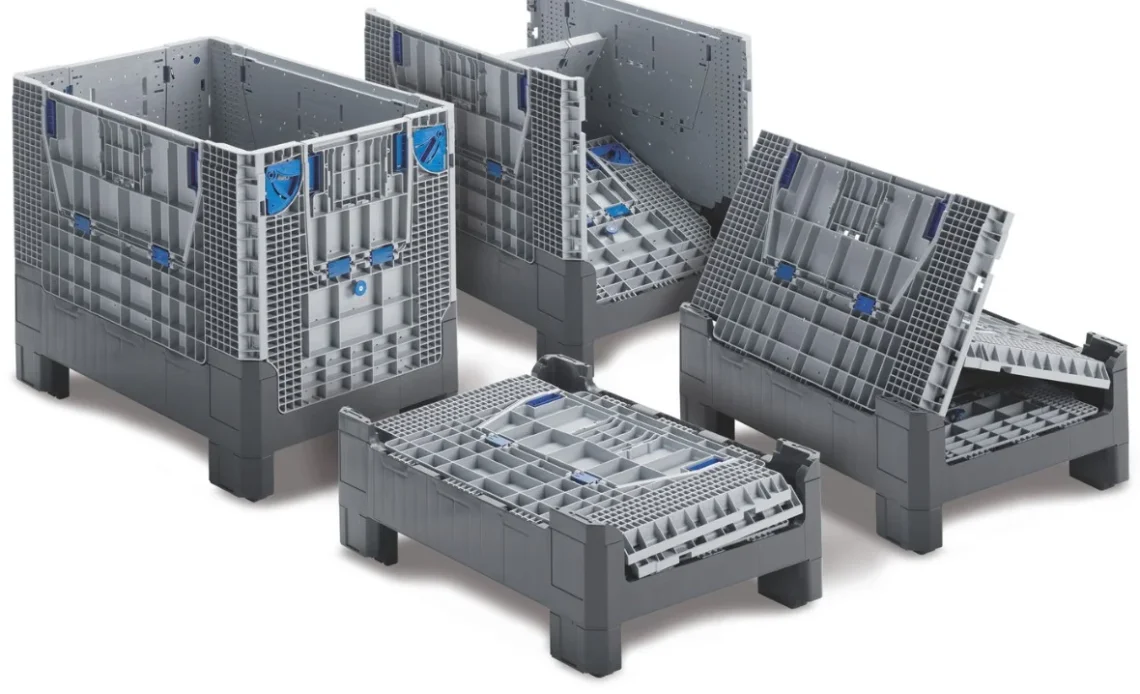
Warehouses now demand smarter systems that protect goods while reducing storage waste. Efficient planning improves stacking capacity while maintaining order during daily operations. Rising demand encourages collapsible bulk containers supporting organized stacking during storage periods. Structured container designs support better material flow across busy logistics environments. Businesses, therefore, adopt flexible storage structures that simplify handling processes.
Design Features Supporting Compact Storage Management
Organized storage structures support better handling across distribution environments daily. Intelligent container engineering reduces wasted warehouse floor capacity significantly.
- Reinforced folding panels improve structural strength during repeated warehouse handling.
- Compact stacking frames reduce vertical storage pressure inside organized facilities.
- Durable side walls protect transported goods during routine material movement.
- Smooth locking hinges allow controlled container adjustment during operational tasks.
- Efficient base structures support balanced stacking across large inventory loads.
Folding Mechanisms Enabling Adaptive Storage Efficiency
Adaptive engineering improves storage flexibility during operational shifts throughout distribution facilities. Folding container systems reduce unused volume when transport cycles pause.
- Hinged side panels allow quick adjustment during container folding procedures.
- Internal support frames stabilize structures while supporting stacked goods securely.
- Smooth panel movement reduces effort during routine warehouse folding operations.
- Efficient locking joints maintain stability after containers reopen during reuse.
- Compact folded dimensions allow better storage inside restricted facility zones.
Stack Optimization Improving Warehouse Capacity Management
Effective stacking structures allow greater storage density without operational congestion. Proper container engineering simplifies vertical organization across large warehouse inventories.
- Structured stacking grooves guide container alignment during warehouse arrangement tasks.
- Balanced weight distribution protects lower containers during tall stacking operations.
- Reinforced base plates stabilize containers across heavy inventory loads.
- Uniform container sizing improves space planning across organized storage layouts.
- Stable stacking designs prevent unwanted container shifting during warehouse movement.
Reusable Packaging Supporting Sustainable Logistics Systems
Sustainable packaging systems reduce waste while improving long term logistics performance. Reusable container engineering supports repeated transport cycles without structural failure.
- Reusable container systems reduce packaging waste within supply operations.
- Durable materials extend product lifecycle, supporting environmental responsibility initiatives.
- Collapsible engineering lowers return transport volume across distribution networks.
- Long-lasting structural components reduce replacement frequency within warehouses.
- Sustainable packaging design improves operational efficiency alongside environmental responsibility.
Why Folding Containers Improve Warehouse Space Efficiency?
Warehouse facilities require flexible storage tools supporting changing inventory levels daily. Folding container systems reduce unused space while protecting stored goods effectively. Organized stacking, therefore, improves operational order across distribution environments.
Smart Storage Future
Efficient logistics planning demands adaptable structures supporting organized storage operations daily. Industrial packaging innovation continues to improve folding container engineering across warehouses. Storage efficiency increases when flexible systems reduce unnecessary warehouse congestion. Businesses, therefore, adopt collapsible bulk containers supporting organized material handling efficiency. Smart storage systems ultimately strengthen long-term supply chain productivity.