
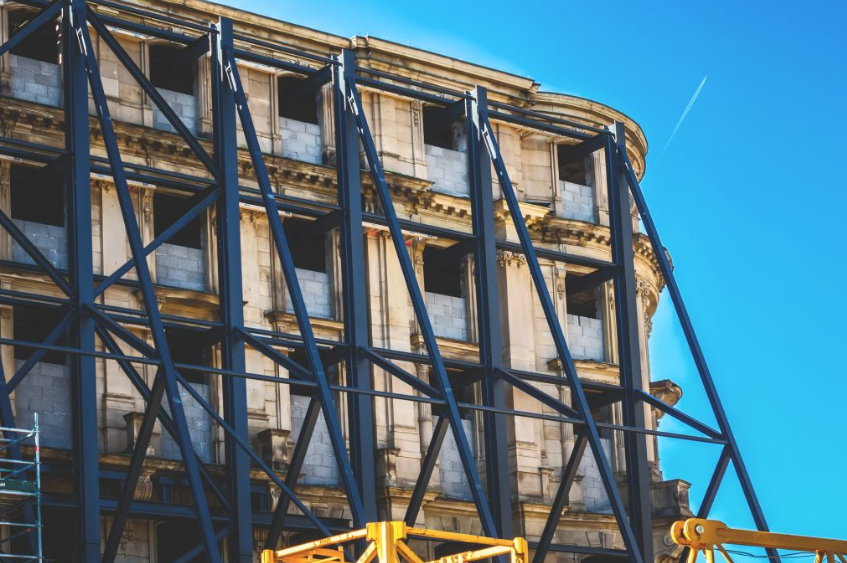
Imposing steel skeletons rising against the skyline, bridges spanning impossible distances, and monumental renovations all share a hidden backbone: temporary supports that make construction possible. Yet, these structures remain unsung heroes, often coming into play only when failure is not an option. The question is, how can engineers devise temporary support systems that are not just functional, but innovative, cost-efficient, and adaptable to the unique challenges of every project?
Identifying Challenges in Temporary Support Engineering
Temporary support engineering is rarely straightforward. Every site comes with its own constraints, risks, and expectations.
Common Structural Issues and Risks
From unpredictable soil conditions to shifting loads in partially completed structures, temporary supports must handle dynamic pressures that permanent designs may never face. Even minor miscalculations can lead to costly delays, compromised safety, or catastrophic failure.
Limitations of Conventional Support Methods
Conventional approaches, often relying on standardized shoring or scaffolding, may not address site-specific challenges. These methods might lack flexibility, become resource-intensive, or prove incompatible with ambitious architectural visions.
Impact of Poor Temporary Support on Project Success
When temporary supports are inadequate, the consequences ripple across the project. Work can stall, unexpected costs mount, and safety is at risk. In extreme cases, the reputation of engineers and contractors may be at stake, especially when high-profile projects are in the spotlight.
Harnessing Creativity for Effective Support Solutions
Rigid formulas and textbook solutions have their limits. The backbone of effective temporary support engineering is creativity informed by deep experience.
Beyond Academic Knowledge: The Role of Experience and Ingenuity
While structural calculations and load analysis are essential, the real breakthroughs come from seasoned professionals who have encountered and solved complex problems on site. Creative engineering often involves seeing possibilities that standard models overlook, drawing from lessons learned and an openness to unconventional ideas.
Integrating Engineering Principles with Practical Constraints
No design exists in a vacuum. The most successful solutions marry theory with the realities of construction: available materials, site access, weather, and even the skill sets of the crew. This integration ensures that the support system is not only safe and effective but also practical to install, adjust, and remove.
Collaborative Brainstorming with Clients and Teams
Innovation thrives in collaboration. Engaging with clients and on-site teams early in the process uncovers insights that shape better solutions. By inviting input from all stakeholders, engineers can preempt problems, streamline workflows, and ensure the resulting supports align with the broader project vision.
Designing Optimal Temporary Support Systems
Every project begins with a blank slate, but the pathway to an optimal temporary support solution follows several key stages.
Assessing Project Needs and Environmental Factors
Understanding the site’s specifics is the foundation. Engineers must examine structural loads, ground conditions, weather patterns, and any environmental hazards. In urban settings, additional challenges like limited space and noise restrictions can drive the need for creative thinking.
Selecting Appropriate Materials and Equipment
Material choice can make or break a support system. Options range from steel and aluminum to engineered wood and composite materials, each with distinct strengths and limitations. The right combination of equipment and materials ensures that supports are robust, lightweight, and cost-effective.
Innovative Structural Concepts for Multi-Storey Buildings and Large Infrastructure
Projects involving multi-storey buildings or civil infrastructure often require custom-designed systems. Modular supports, adjustable shoring, and hybrid scaffolding are just some of the innovative concepts engineers employ. Such solutions not only meet structural demands but also facilitate safer and faster construction.
The NadeauSDM Approach to Creative Engineering
Organizations like NadeauSDM have built a reputation for transforming temporary support engineering into a finely tuned craft.
Understanding Project Vision and Establishing Needs
The process starts with a deep dive into the project’s vision and specific requirements. Early collaboration ensures that all objectives and constraints are mapped out, forming the groundwork for creative problem-solving.
Developing Customized, Turnkey Solutions
Rather than offering off-the-shelf answers, experts like ingénieur échafaudage NadeauSDM design and develop custom, turnkey solutions tailored to the specific needs and challenges of each site. This approach blends engineering know-how with an agile response to the realities of construction.
Combining Engineering Design with Equipment Provision
The marriage of design expertise and equipment supply is a powerful differentiator. By integrating these functions, NadeauSDM simplifies logistics, reduces the risk of mismatches between design and materials, and keeps projects on schedule.
Streamlining Supply and Logistics for Temporary Supports
Creative engineering is not just about what is built, but how resources are managed.
Coordinating Equipment Procurement and Delivery
A well-designed system is only as good as its implementation. Coordinating procurement, transportation, and on-site delivery of specialized equipment requires meticulous planning and real-time communication.
Managing Specialized Tools and Materials on Site
Temporary supports often demand tools and materials that are not part of the standard construction arsenal. Tracking these resources and ensuring their readiness at critical moments prevents costly downtime.
Ensuring Timely and Cost-Effective Resource Allocation
Efficiency in logistics translates directly to project profitability. Streamlined supply chains, flexible scheduling, and proactive inventory management help keep costs in check and timelines on track.
Implementing and Monitoring Engineering Solutions
The true test of a support system comes during construction itself.
On-site Expert Support and Quality Assurance
Continuous engagement with expert engineers during installation and use ensures that supports perform as intended. Their presence enables prompt troubleshooting and adherence to safety standards.
Adapting Designs Based on Real-time Feedback
Unexpected challenges are inevitable. Success depends on the ability to adapt, with engineers making real-time adjustments to the design based on actual site conditions and feedback from the construction team.
Maintaining Safety and Budget Control Throughout Construction
A focus on safety and cost control is embedded at every stage. Proactive monitoring, regular inspections, and clear communication are crucial to avoid incidents and budget overruns.
Actionable Strategies to Foster Creativity in Temporary Support Engineering
How can organizations and individuals consistently develop innovative solutions?
Continuous Learning and Knowledge Sharing
Staying updated with new techniques, materials, and case studies is key. Sharing knowledge within teams and across projects accelerates the collective problem-solving capacity.
Leveraging Cross-disciplinary Expertise
Breaking down silos between engineering, architecture, logistics, and site operations leads to more robust solutions. Cross-disciplinary teams can see challenges and opportunities from multiple angles.
Encouraging Innovation through Structured Methodologies
Structured brainstorming sessions, design charrettes, and iterative prototyping foster a culture where creativity is expected and rewarded. These methodologies help turn bold ideas into practical outcomes.
Future Trends and Innovations in Temporary Support Engineering
The field is evolving rapidly, spurred by new technologies and changing priorities.
Emerging Materials and Technologies
Advanced composites, lighter alloys, and smart sensors are transforming how temporary supports are designed and monitored. These innovations promise greater strength with less weight, reduced installation time, and improved safety.
Digital Tools for Design and Project Management
Building Information Modeling (BIM), digital twins, and simulation software are enabling engineers to test and refine support structures virtually before a single piece is installed. This reduces errors and allows for more complex designs.
Sustainability Considerations in Temporary Structures
As environmental concerns move to the forefront, sustainable materials, reusable systems, and designs that minimize waste are gaining traction. The future will likely see temporary supports that leave a lighter footprint on both the environment and the project budget.
In a world where construction challenges grow more complex, the ability to craft creative, effective temporary support solutions stands as both a technical and artistic achievement. For those willing to blend expertise, imagination, and collaboration, the possibilities are as limitless as the structures they enable.