
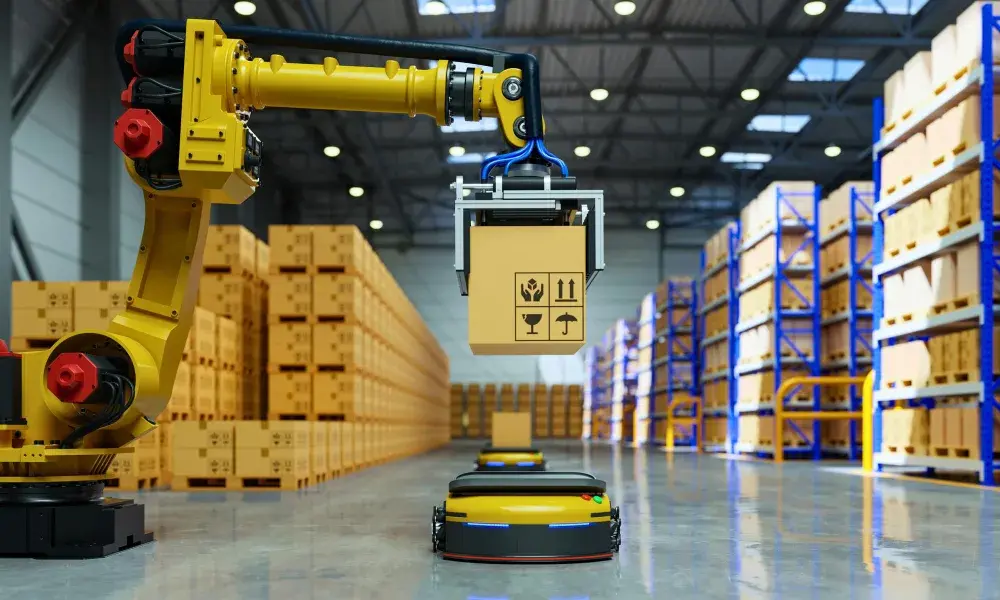
Understanding the Shift Toward Robotics
Warehouses continue to face pressure from rising order volumes, tighter service expectations, and persistent labor shortages. These challenges push managers to find methods that improve consistency and throughput without overwhelming the workforce. Robotics has emerged as a reliable tool for addressing these concerns by enhancing accuracy, supporting faster task execution, and reducing physical strain on workers. The technology’s growing presence in distribution centers reflects a broader shift toward solutions that support long-term operational stability.
Expanding the Role of Automation
As facilities evaluate where robotics offer the most value, many also explore warehouse automation solutions to complement existing equipment. Robotics fills gaps where manual tasks create bottlenecks, especially in picking, replenishment, pallet building, and transport. When paired with automation already in place, robots create smoother flow and reduce the variability that often slows fulfillment.
Robotic systems adapt to shifting order profiles, making them well suited for operations that serve dynamic customer bases. Their ability to handle repetitive tasks consistently allows managers to assign staff to higher-value work.
Streamlining Item Handling and Transport
One of the most significant contributions robotics brings to warehouse efficiency is its ability to reduce travel time. Autonomous mobile robots move inventory between picking, packing, and storage zones without requiring human effort. This shortens travel paths and allows operators to focus on picking rather than walking.
Transport robots also adjust movement patterns based on real-time conditions. When aisles become congested, dynamic routing helps them avoid delays and maintain predictable cycle times.
Improving Picking Accuracy and Speed
Robotic picking systems use advanced vision tools and gripping technology to handle a wider range of items than ever before. These systems learn from repeated interaction, improving performance over time.
High picking accuracy reduces rework, returns, and customer dissatisfaction. The speed at which picking robots operate also helps facilities meet shorter order cycle commitments, especially during peak demand.
Supporting Replenishment and Putaway Workflows
Replenishment and putaway activities often contribute to congestion in storage areas. Robotics improves these workflows by automating the movement of pallets or totes to designated locations.
Automated pallet shuttles, vertical lift modules, and mobile robots all support faster restocking with fewer interruptions. These tools help maintain inventory availability at forward pick locations, which strengthens picking efficiency.
Enhancing Worker Safety and Ergonomics
Safety plays a central role in any modern warehouse. Robotics reduces exposure to tasks that lead to strain, repetitive motion injuries, or slips and falls. Automated palletizers, robotic arms, and lifting devices handle heavy or awkward items with consistent control.
This shift improves retention and contributes to a healthier workforce. Workers can focus on quality checks, equipment oversight, and process improvements without risking injury through repetitive lifting.
Increasing Throughput Without Increasing Footprint
As SKU counts grow and customer expectations evolve, many facilities struggle to expand capacity without expanding their building. Robotics supports higher throughput by optimizing space usage and increasing workflow predictability.
Dense storage systems paired with robotic retrieval improve cube utilization. Transport robots reduce the need for wide aisles dedicated to manual material movement. These gains help facilities reach new throughput targets while operating within their existing footprint.
Integrating Robotics Into Daily Operations
Successful robotics programs depend on strong integration with existing equipment and software. Robots must communicate with warehouse management, warehouse execution, and warehouse control systems to receive tasks and confirm completion.
Clear communication ensures robots work in sync with human operators. It also supports error recovery when items appear in unexpected locations or need rerouting.
Adapting Robotics to Facility Variability
Warehouses rarely operate under fixed conditions. Seasonal demand, SKU changes, packaging updates, and layout adjustments all influence performance. Robotics excels in environments with shifting requirements because many systems support rapid reprogramming or flexible deployment.
Managers can update workflows without major structural changes, allowing robotics to adapt as operational needs grow. This flexibility ensures the systems remain useful even as product profiles and volumes evolve.
Supporting Predictive Maintenance Strategies
Robotic systems generate detailed performance data that helps maintenance teams monitor wear, motion patterns, and error rates. Early detection of mechanical or software issues improves uptime and protects the facility from unexpected slowdowns.
When predictive maintenance strategies combine with robotics, overall performance becomes more stable. Facilities maintain consistent throughput and avoid the cascading impacts of equipment failures.
Strengthening Performance During Peak Periods
Seasonal peaks often test the limits of warehouse capacity. Robotics helps facilities maintain service levels by supporting faster picking, steadier transport, and more reliable replenishment.
Robots scale quickly by increasing work hours or adjusting task distribution. This responsiveness helps meet surge demand without relying solely on temporary labor.
Building a Path Toward Long-Term Efficiency
Robotics represents more than a short-term improvement. It supports strategic goals by improving consistency, reducing labor strain, and strengthening throughput predictability. As technology advances, robotics will continue to reshape warehouse processes and offer new opportunities for optimization.
Managers who invest in robotics today gain an operational advantage that compounds over time. By integrating systems thoughtfully and analyzing performance data, they build warehouses capable of adapting to growth and delivering reliable service even under pressure.